Written by Staff Writer Alexis Dong
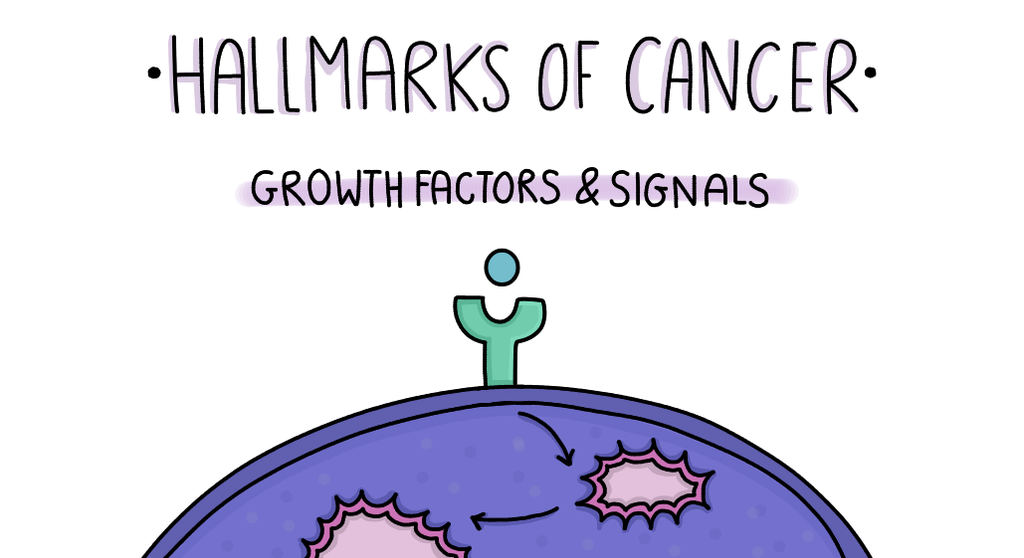
One of the features typically found in all cancer cells is the ability to grow and divide without the need for outside instructions. This feature is also known as being self-sufficient in growth signals.
Growth signals are the chemicals that cause a series of events and eventually lead to a change occurring in the cell. Growth signals specifically focus on cell growth and replication. One example of a specific growth signal is a growth factor. Some changes include allowing a cell to grow and replicate.
In order to fully understand how growth signals affect the cell, we must first step back and take a look at the regulatory processes in a normal cell.
How Normal Cells Know When to Grow
Cells are normally stuck at specific checkpoints in the cell cycle and can only move on when ligands, or chemical messengers, from their environment bind to receptors on the surface of their cell. For cell growth and replication, these ligands are called growth factors.
The binding of growth factors leads to growth signals being activated on the inside of the cell. These growth signals cause a series of events to occur, as mentioned previously, ultimately leading to growth and division of the cell.
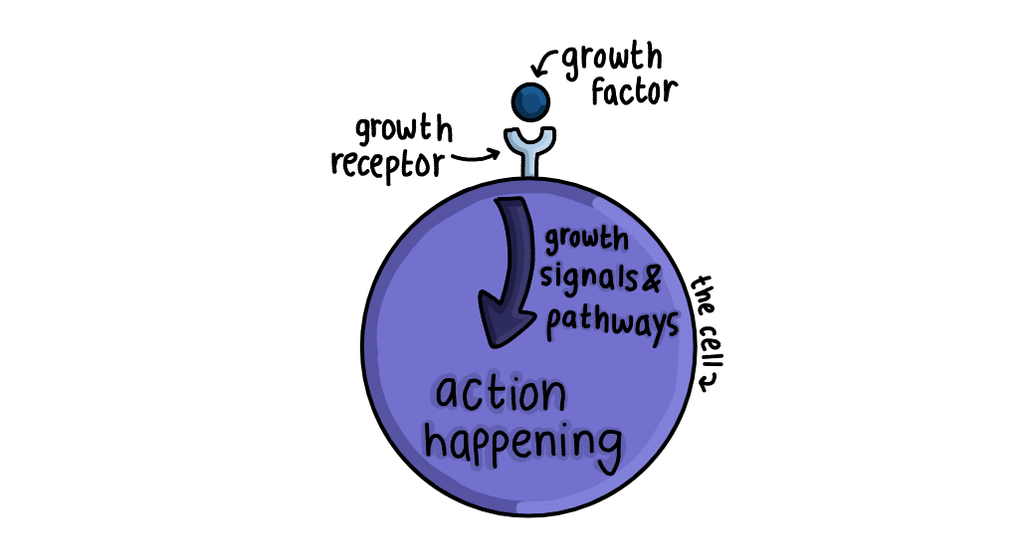
The growth factors that bind to cell surface receptors are special kinds of proteins found in a cell’s microenvironment, or nearby environment surrounding the cell. They only act on the cells in their immediate surroundings. In this way, a cell’s ability to divide is controlled by factors in its environment.
The Genes That Tell Cells to Grow
Proto-oncogenes are normal genes that play a role in stimulating cell growth and division. They hold the code to make proteins like growth factors (for more information, here is an article explaining them further). These growth factors transmit a specific kind of growth signal called a mitogenic growth signal that helps move a cell past checkpoints in the cell cycle.
Without mitogenic growth signals, no known regular cell type can divide. The dysregulation of these growth signals and factors can lead to both uncontrolled division and accumulation of damage in a cell’s DNA.
When proto-oncogenes mutate, they become oncogenes, which are found in the majority of cancer cells. Many oncogenes act in cancer cells by mimicking growth signals, causing them to become cancerous.
Also, in comparison to regular cells, tumor cells are significantly less dependent on outside growth signals. They are able to generate their own growth signals, and so their dependence on factors in their microenvironment to keep growing is greatly reduced.
As a result, it disrupts a key homeostatic mechanism that normally works to ensure that cells behave normally. This allows them to replicate independently of supervision, causing rapid growth of the tumor.
There are three ways mutated cells obtain the ability to become self-sufficient through growth signals:
- Making their own growth factors to respond to
- Altering the number and reaction of growth factor receptors
- Altering the pathways within the cell that put the growth factor into action.
When Cancer Cells Send Themselves Growth Factors
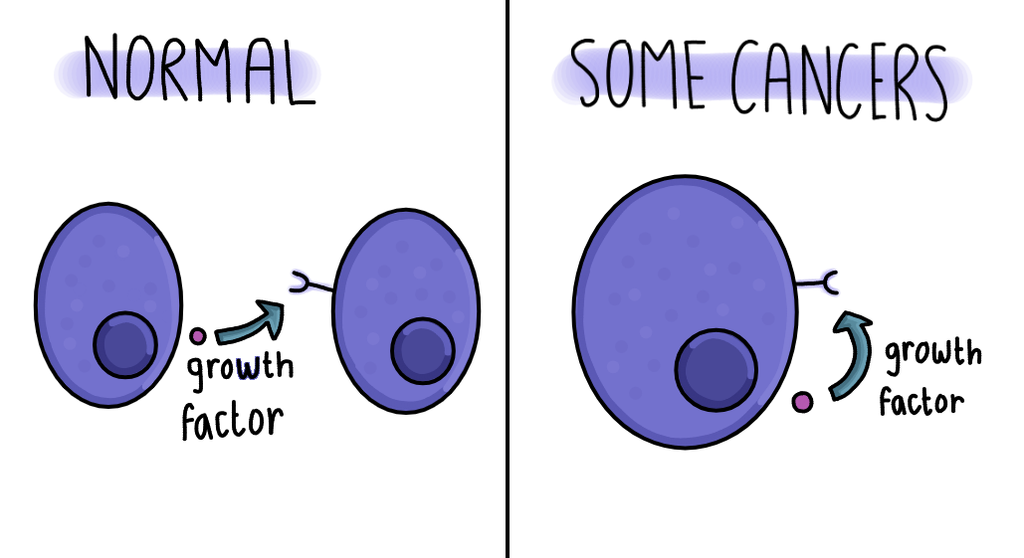
In normal cells, growth factors are made by one cell for another cell to respond to. Cells do not make growth factors that they themselves are affected by.
However, some cancerous cells gain the ability to produce their own growth factors to respond to.
Once stimulated by these growth factors, mutated cells divide into more cells. All of these newly produced cells make more growth factors that trigger even more cells to be produced, resulting in a never-ending positive feedback loop.
Increasing the Reaction on Growth Factors
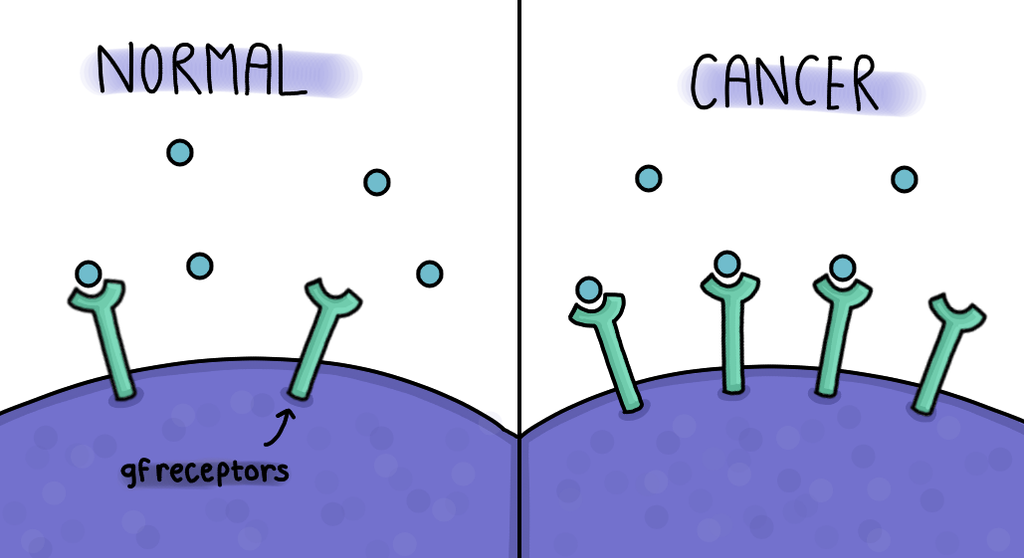
Another way for cells to obtain self-sufficiency in growth signals is by having more growth factor receptors.
The surface of cells has embedded proteins that growth factors can bind to, called receptors. Growth factors only affect a cell when they have bound to one of these surface proteins. Each receptor binds to a unique factor and causes a unique reaction in the cell to occur as a result.
An abnormally high number of GF receptors can make cells more sensitive to their environment: cells may react to low levels of growth factors that they otherwise would not have reacted to, causing increased replication. Cancer cells might increase the expression (and production) of GF receptors to cause this.
In addition to an overexpression of GF receptors, some cancerous cells have mutations where cell surface receptors are triggered without a growth factor ever binding to them. Also known as ligand-independent signaling, this mutation allows cancerous cells to start growth pathways without outside instructions.
A majority of cancer cells also have the ability to switch the type of extracellular matrix receptors they display on the surface of the cell. The extracellular matrix (ECM) is an area outside of the cell and makes up the environment outside of the cell.
Binding to specific ECM receptors causes signals to go into the cell, affecting cell behavior. Many cancer cells tend to favor ECM receptors that transmit pro-growth signals.
Rewriting the Cell’s Growth Machinery
The most complex way for a cell to acquire self-sufficiency is through an alteration of a circuit. Circuits help process signals received inside the cell after growth factors have bound to receptors. Think of them as the different things that happen in the cell after a growth factor binds to a receptor, eventually causing a change in the cell.
One kind of circuit, called the SOS-RAS-RAF-MAP kinase pathway, functions in many important tasks, including proliferation.
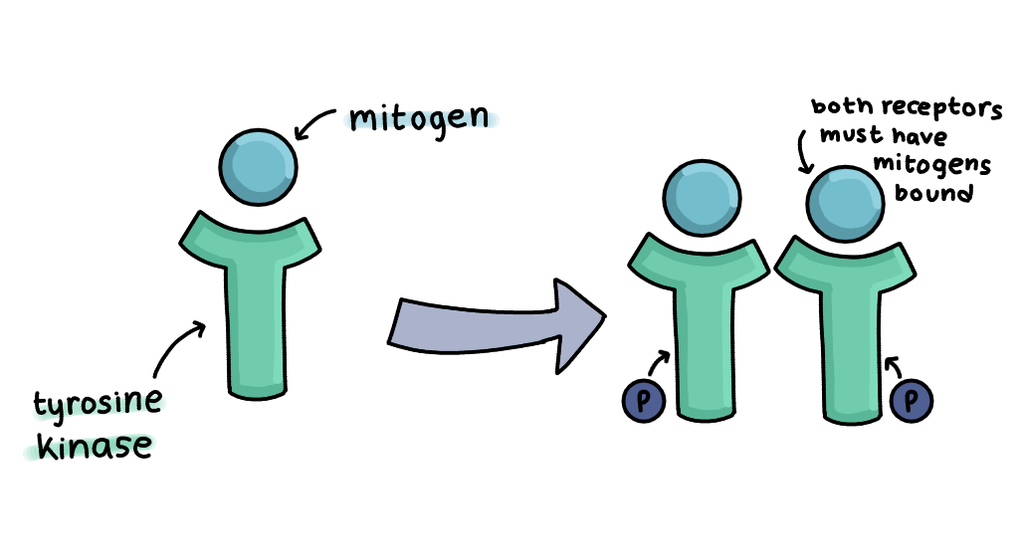
First, a mitogen ( type of growth factor) binds to a receptor called tyrosine kinase. Two tyrosine kinases then dimerize (pair up with each other), activating each other to add phosphate groups to themselves.
A molecule called Grb2 can then dock on the part of the tyrosine on the inside of the cell because it recognises the phosphorylated (phosphate attached) tyrosine receptor. Next, the SOS protein can now attach to the Grb2 molecule.
The SOS protein then helps activate the RAS protein by turning the RAS proteins’ GDP into GTP (a molecule similar to ATP).
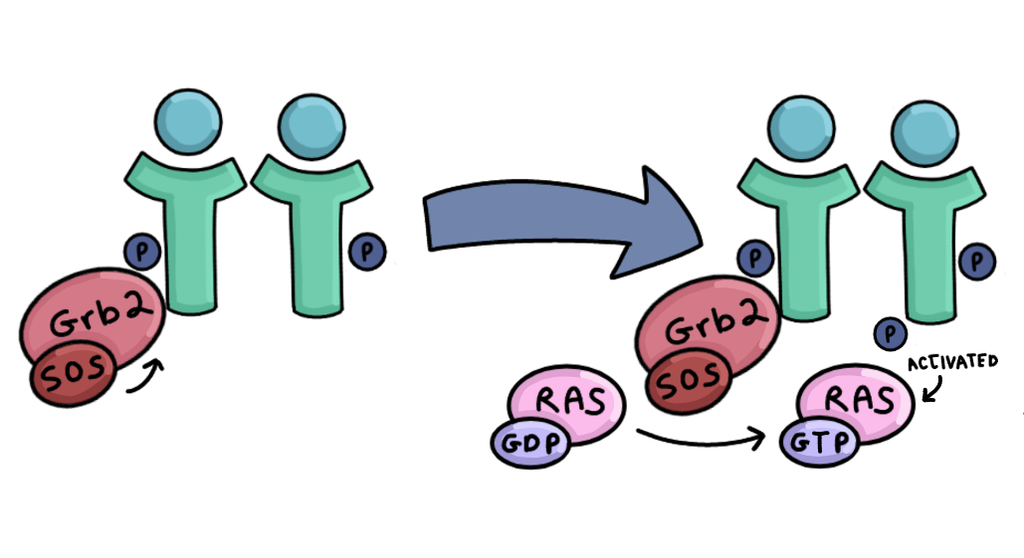
Now that the Ras protein is activated, it can detach from the SOS protein and interact with other molecules like RAF. RAF activates once it interacts with the RAS protein.
It is super important to note that the RAS protein is a molecule that has a set time; molecules like GAP can hydrolyze the GTP and inactivate the RAS protein. When the RAS protein no longer has GTP, it cannot interact with a RAF molecule.
Once the RAF molecule is activated, it interacts with MEK, and MEK gains a phosphate; MEK then interacts with ERK and helps it gain a phosphate as well; both molecules are now activated.
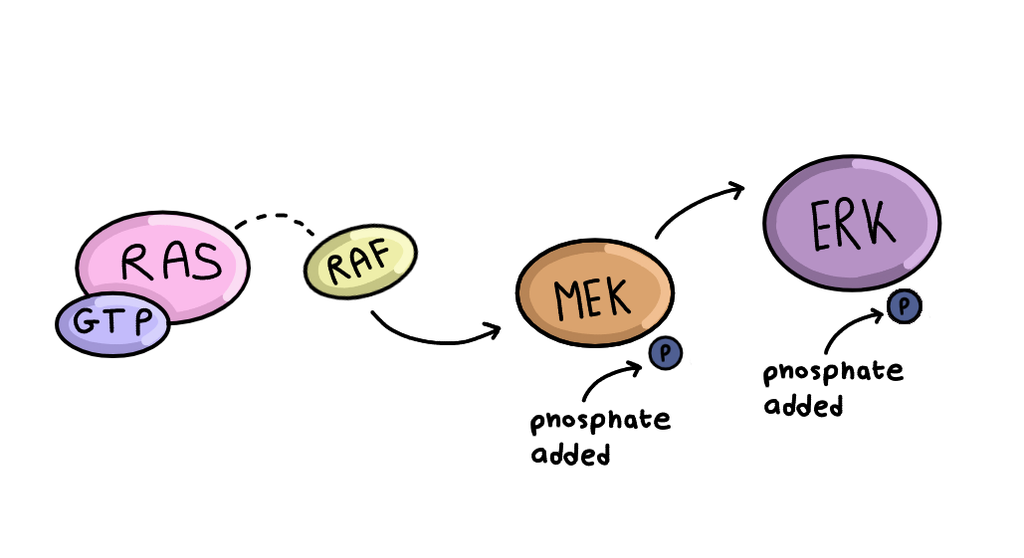
The ERK then travels into the nucleus to interact with molecules that allow gene expression to happen. These genes that are activated are responsible for growth and cell division.
A common mutation occurring in the RAS oncogenes prevents the GAP molecule from hydrolyzing the RAS protein; therefore, the RAS protein permanently stays on, and all the pathways downstream continue to happen without the need for the growth factor binding to the tyrosine receptor. This leads to uncontrolled cell growth, which can cause cancer.
Problems With the Growth Signal Autonomy Hypothesis: Cancer Doesn’t Grow Alone
The growth signal autonomy hypothesis that we have thus covered is actually too simple; it does not accurately represent all of what actually happens in the human body.
Traditionally, researchers have mainly focused on the genetically altered cancer cells, but to fully understand the workings of how growth signals affect cancer in the body, we must also look at the surrounding, normal cells of the tumor.
Typically, cells can be told to grow by their neighboring cells through paracrine signals (used for short-distance communication), or they can be told to grow through hormones or other stimuli that travel through the bloodstream. Cell-to-cell growth is extremely common in normal cells, and is most likely occurring in tumors as well.
Ancillary cells are normal bystanders like fibroblasts and endothelial cells that have the main function of assisting primary cells. Successful tumors are able to use their normal neighboring ancillary cells for benefit by making them release growth signals. After a while, some of these normal cells also begin to mutate alongside the cancer.
Conclusion
By using multiple different techniques, cancer cells can hijack the carefully controlled process of cell growth and replication, allowing them to divide and form tumors.
They can also communicate with and manipulate the normal cells around them, turing the their environment into an additional tool.
Understanding these connections between cancer cells and their surroundings, as well as how they manipulate growth machinery can help researchers find new ways to interrupt the signals that allow tumors to grow.
If you learned anything, make sure to send us a message on our Instagram (@whencellsresist). We love hearing back from our readers!
All original insights and illustrations are our own. This content is not intended as medical advice.
Sources
https://www.jto.org/article/S1556-0864(15)31506-9/fulltext
https://pmc.ncbi.nlm.nih.gov/articles/PMC3380213
https://pubmed.ncbi.nlm.nih.gov/18411127
https://www.sciencedirect.com/topics/immunology-and-microbiology/proto-oncogene