If all cells have the same DNA, then how come there are different types? And how is this process related to cancer?
Gene regulation is how the cell controls what genes are expressed, when they’re expressed, and how much they’re expressed . Some examples we’ll explore are:
- Epigenetic gene regulation
- Transcriptional gene regulation
- Post- transcriptional gene regulation
- Translational gene regulation
In this post, we’ll look at how gene regulation allows the body to produce different types of cells from the same blueprint, and how that process can allow cancer to start and grow.
Epigenetics: Turning Genes On and Off Without Changing the DNA Sequence
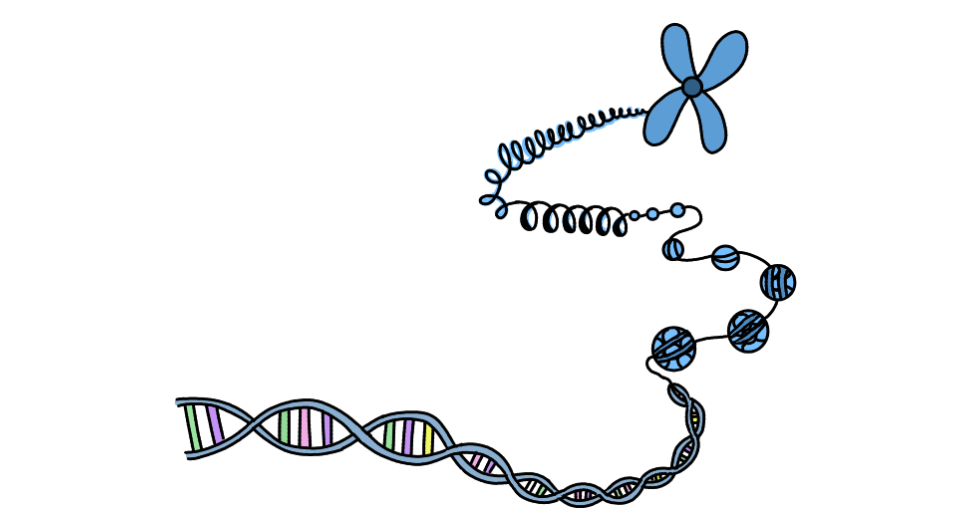
DNA is stored in the nucleus, where it’s wrapped around proteins called histone proteins. This combination of DNA and histone is called a nucleosome. These complexes help make up chromatin, which makes up chromosomes (this blog post has more details about DNA and how it’s stored).
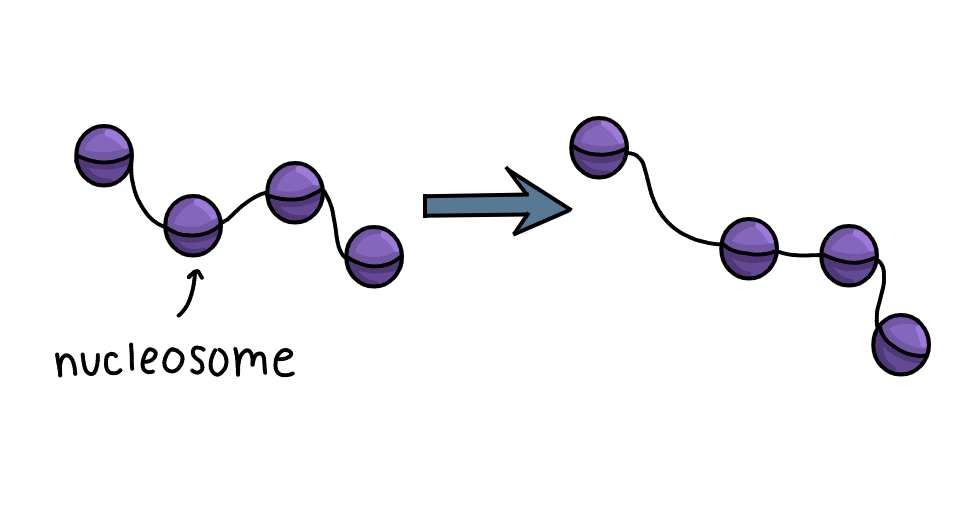
When a gene needs to be read and expressed, the nucleosomes surrounding the specific area can either reposition or be removed, exposing the desired DNA.
Attaching different molecules to the histone proteins can cause nucleosome complexes to be either packed together tightly or bound loosely.
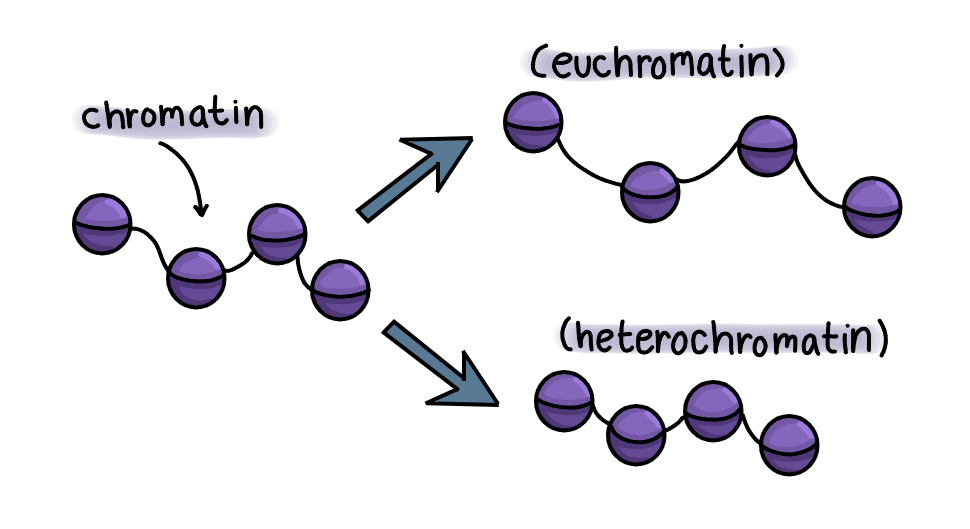
A process called histone methylation causes nucleosome complexes to be packed tightly most of the time. Depending on which histone is modified and where, methylation can either activate or repress genes. Methylation in general is the process of adding a chemical tag called methyl to either DNA or histone proteins.
In DNA, these groups are added onto cytosine bases in CpG dinucleotides. These are places that are made of a C and G base, connected by a phosphate. When these CpG dinucleotides are clustered, they can form CpG islands, which are found near promoter regions. These islands help regulate gene expression.
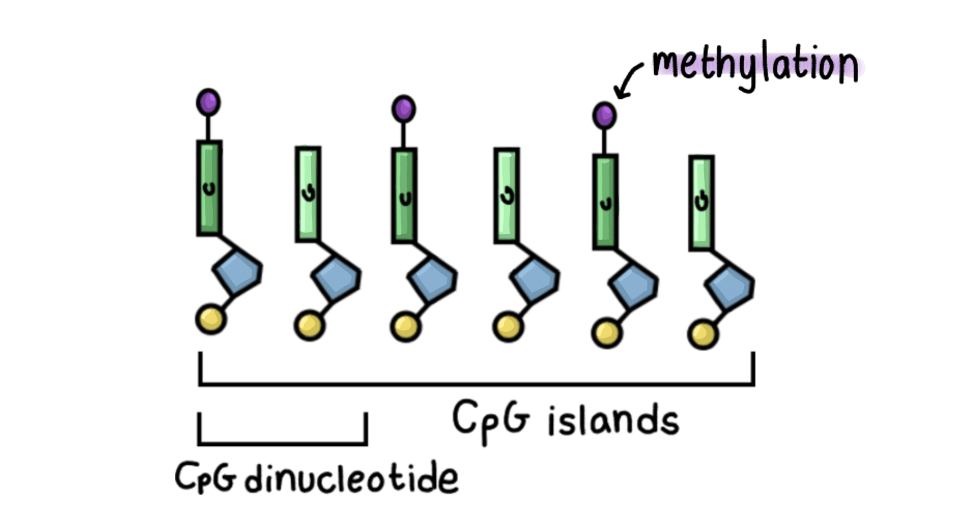
The methylation of DNA causes the specific gene to be turned off, because enzymes have a hard time attaching onto a specific site used to start transcription: the promoter.
Promoter regions are sequences of DNA where transcription factors bind, which signals to RNA polymerase to attach there. One well-known type of promoter in eukaryotes is the TATA box. Here, DNA methylation prevents some transcription factors from binding.
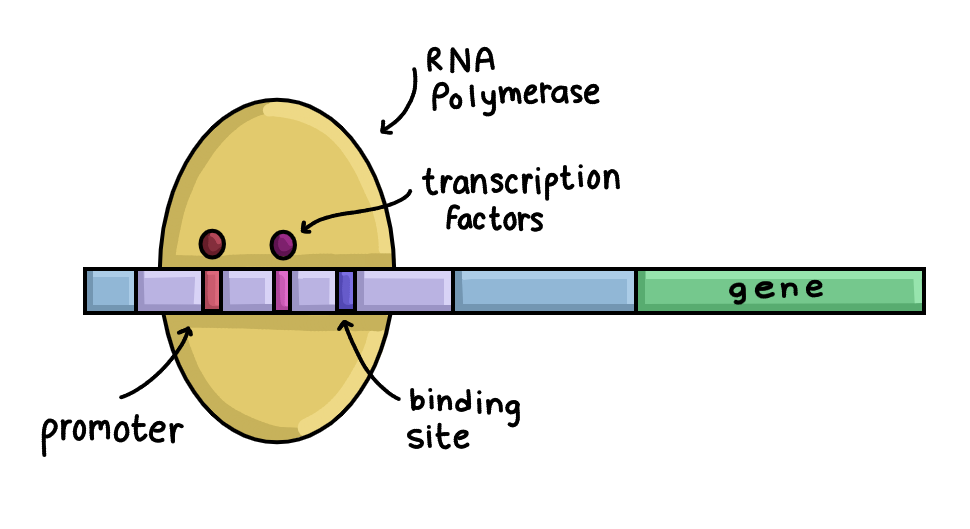
Transcription factors are proteins that tell RNA polymerase where to start reading the DNA, in a process called transcription (here is a blog post explaining the process in more detail).
As mentioned earlier, when histone proteins are methylated, the nucleosome complexes become tightly packed. This means that DNA can’t be read as easily by enzymes because transcription factors have a hard time attaching to the promoter region. This kind of tightly bound RNA to histone proteins is called heterochromatin.
Being packed together loosely means that transcription factors can reach the promoter region, allowing enzymes to be able to transcribe the DNA. This is called euchromatin.
A process called acetylation causes the genetic material to look like this. This process is similar to methylation, but uses acetyl tags instead to attach onto histone proteins.
Most methylation and acetylation changes to the DNA and histone proteins can’t be inherited from generation to generation, but are passed down during mitosis, or cell division. This allows for consistency of what genes are turned on or off in an organism.
Transcriptional Regulation: Deciding Which Genes Get Read
As mentioned earlier, in eukaryotes, RNA polymerase needs transcription factors to be bound to a promoter to be able to start transcription. These factors can either repress or promote whether a gene is expressed or not. There are many different sites where transcription factors can bind. Some examples include:
- Enhancers
- Promoters
- Silencers
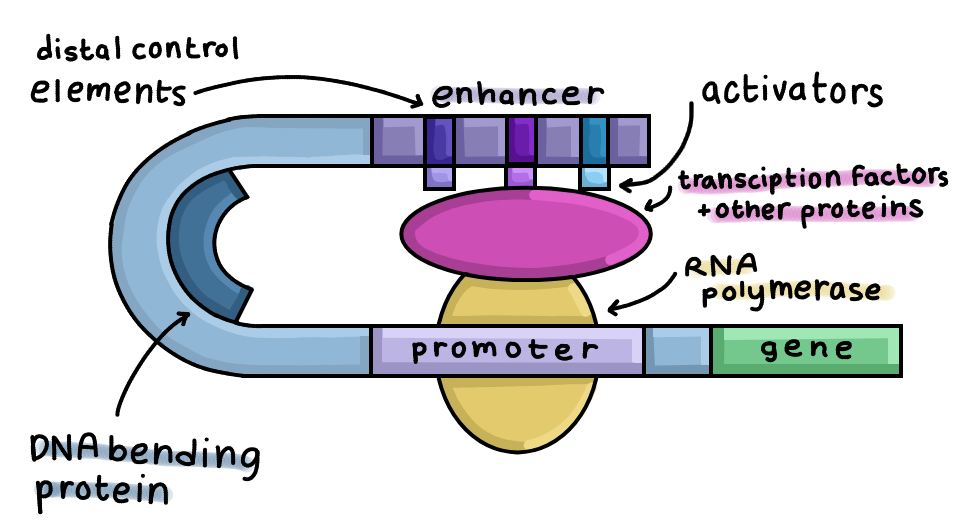
Enhancer sites, when bound to, increase the chances that a gene will be expressed, and silencers do the opposite.
If transcription factors called activators bind to either of the 2 sites at the distal control elements, the DNA gets folded via a DNA bending protein so that the enhancer/silencer site can interact with the promoter. This can either increase or decrease the chance that the gene will be expressed.
Post-Transcriptional Regulation: Editing and Destroying RNA
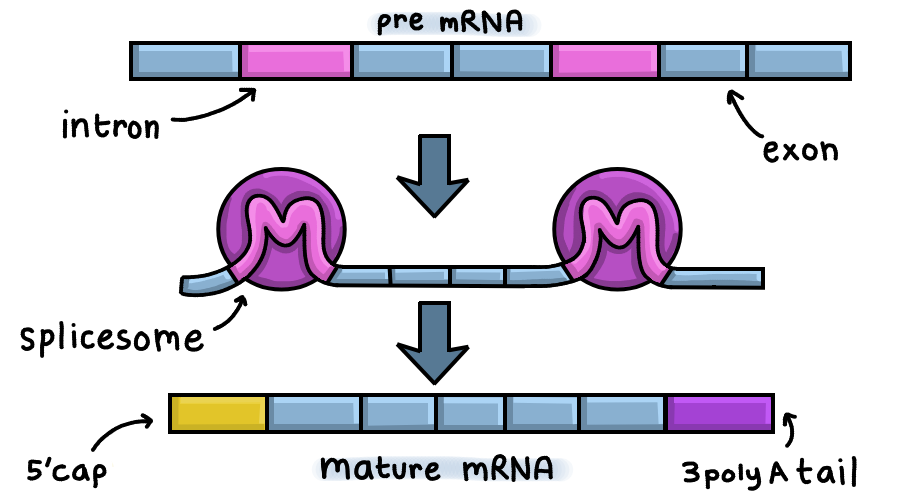
One type of gene regulation here is called RNA splicing. After pre-mRNA has been made via translation, it has the non-coding parts called introns cut out and the coding parts, called exons, spliced together (for more information on how RNA splicing works, here is a link to another blog post).
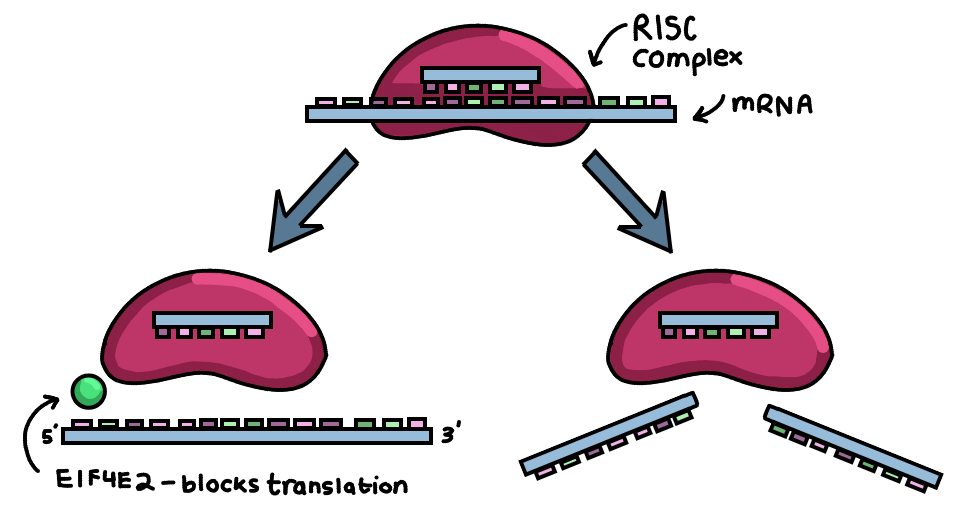
Another molecule that aids in regulating genes is miRNA, which stands for microRNA. This type of RNA helps identify mRNA to destroy or block, in a process called RNA interference. It is usually found in the RISC complex.
If the complex recognizes the mRNA, due to miRNA binding with it, then it will either block translation of the mRNA or cleave it, leading to its degradation. This cutting is done by an enzyme in the complex called the Argonaute protein.
Translational Regulation: The Process that Controls Which Proteins are Made
Eukaryotic initiation factors (eIFs) are the main kind of translational gene regulators. These proteins help start translation at the ribosome (for a more in-depth look at how translation works, here is a blog post). There are many different kinds of eIFs, each with their own unique function. For example, one kind, called eIF5B, helps the large ribosome bind to the small ribosome, making it ready for translation. Regulation of these proteins can help stop the process of making proteins.
Another example is eIF2. This initiation factor helps carry the tRNA with the starting amino acid (Met) to the ribosome. It does so with the help of GTP (an energy source like ATP). After delivering the tRNA, the GTP is broken down into GDP. This shuts down eIF2. To make it active again, another protein called eIF2B takes the GDP out and replaces it with a new GTP, like replacing a battery.
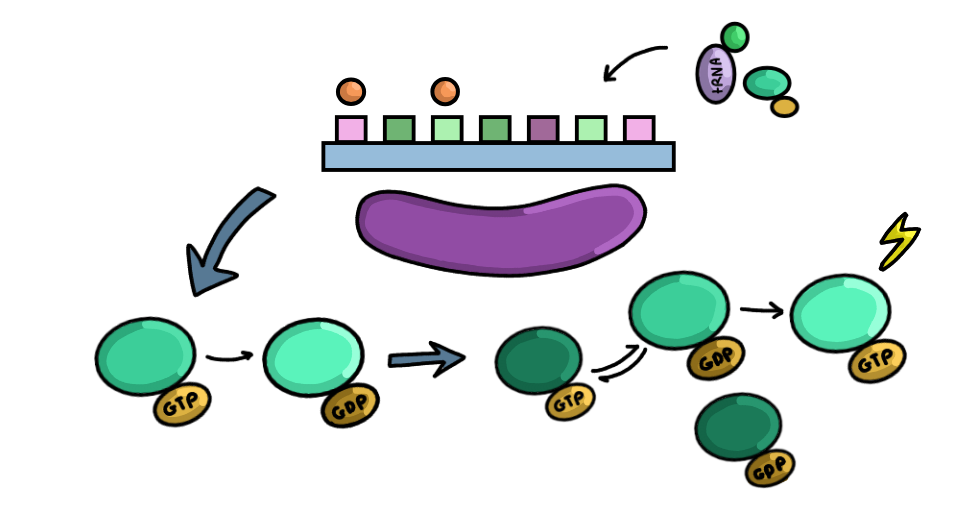
If the cell is under stress, like UV light, it tells enzymes to add a phosphate to eIF2. This makes the protein latch onto eIF2B, enabling the latter unable to reactivate eIF2. Since eIF2 no longer has anyone to replace the GDP, protein synthesis is reduced.
Post-Translational Regulation: Fine-Tuning Proteins After They’re Built
Gene regulation here usually comes in the form of post-translational modifications. These are changes to a protein to make it suitable for its role in the cell. For more information, here is a previous blog post that goes more in depth on them.
So How Does this Connect to the Question?
Gene regulation allows cells to differentiate. By controlling what genes are expressed, cells can turn off genes that don’t aid them and turn on genes that let them become specialized, through all of the processes mentioned in this post. Gene regulation is how a nerve cell is different from a skin cell, despite having the same DNA.
When Gene Regulation Goes Wrong: HER2 Receptors and Breast Cancer
Gene regulation is important to cancer. When the process stops working, it can cause either the underproduction of essential proteins or the overproduction of oncoproteins (proteins that promote cancer development). One example is HER2+ breast cancer.
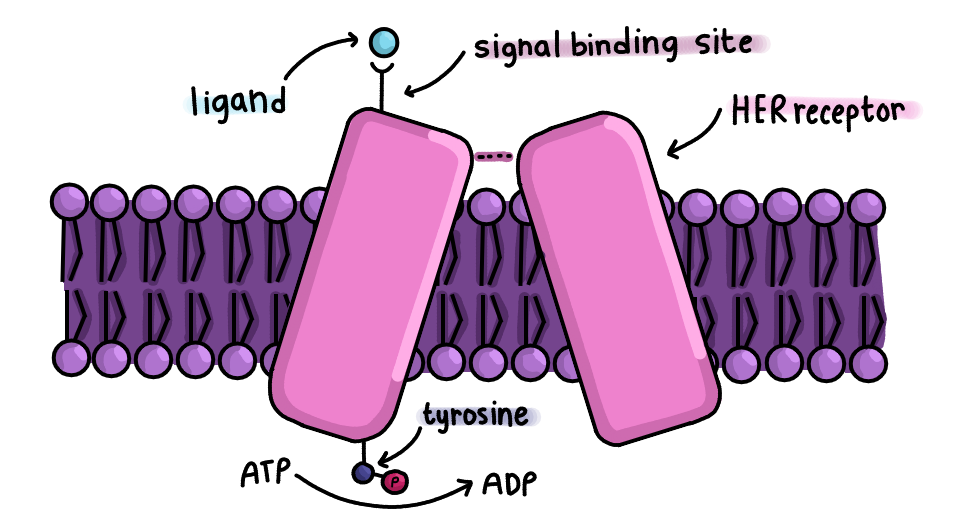
In normal cells, HER helps cells with growth and division. These receptors take messages from outside the cell, called ligands, and relay them to the inside of the cell.
They are a type of receptor called a tyrosine kinase. HER-2 is a type of HER receptor, and there are many other kinds of HER receptors as well.
Here is how these types of receptors work:
- When a ligand binds to the signal-binding site of the receptor, 2 HER receptors bind together to form a pair (called a dimer).
- The receptor removes a phosphate from ATP and attaches it to a tyrosine amino acid on themselves.
- Relay proteins come in and bind to the phosphate, which causes more reactions to occur in the cell (called signal transduction)
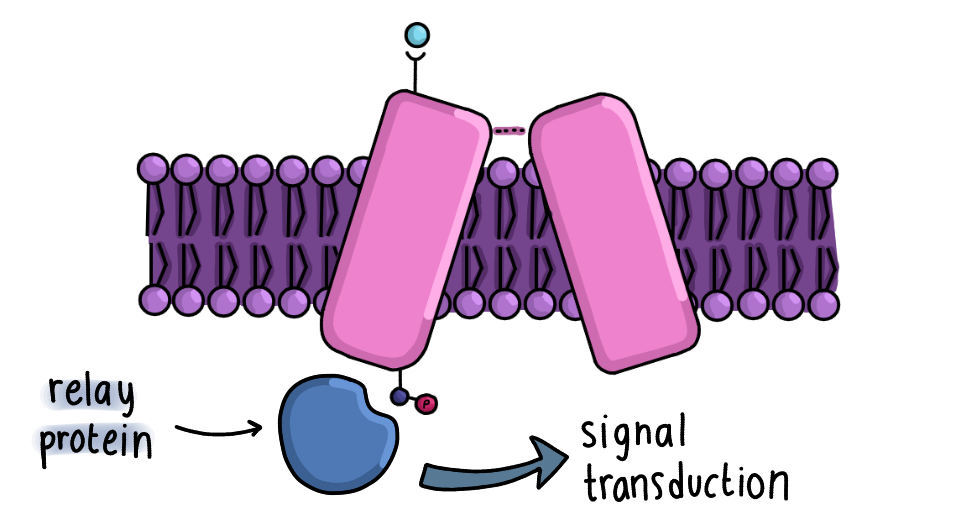
A gene mutation can cause the cell to make too many copies of the HER2 gene, in a process called gene amplification. The additional gene copies lead to much higher HER2 expression, and cause the cell to have too many HER2 receptors on its cell surface membrane. HER receptors bind together in pairs of 2.
The special thing about HER2 is that if it binds to another HER receptor (most commonly HER3-), it causes signals to last longer, causing more growth and division. The large number of HER2 receptors greatly increases signalling in growth pathways, causing cells to divide and grow uncontrollably.
Conclusion
Gene regulation is one of the reasons that life can be so complex. Different patterns of gene expression can allow every one of your cells to become specialized through different processes like transcriptional regulation or epigenetics.
When genes that promote cell growth become overactive, or genes that normally suppress tumors are turned off, cells can start to divide uncontrollably, which can lead to cancer. The overexpression of the HER2 receptor in breast cancer is just one example. In the next post, we’ll take a look at one of the most prominent ways cancer mutations can occur: through DNA replication.
If you learned anything, make sure to send us a message on our Instagram (@whencellsresist). We love hearing back from our readers!
All original insights and illustrations are my own. This content is not intended as medical advice.
Drawings are simplified for illustrative purposes and may not be exact representations of the subjects
Sources
https://www.genome.gov/genetics-glossary/Gene-Regulation
https://bio.libretexts.org/Courses/Lumen_Learning/Biology_for_Non-Majors_I_(Lumen)/10%3A_Gene_Expression/10.04%3A_Eukaryotic_Gene_Regulation
https://www.youtube.com/watch?v=ebIpkw3XapE
https://openstax.org/books/biology-2e/pages/16-1-regulation-of-gene-expression
https://openstax.org/books/biology-2e/pages/16-3-eukaryotic-epigenetic-gene-regulation
https://openstax.org/books/biology-2e/pages/16-4-eukaryotic-transcription-gene-regulation
https://openstax.org/books/biology-2e/pages/16-5-eukaryotic-post-transcriptional-gene-regulation
https://openstax.org/books/biology-2e/pages/16-6-eukaryotic-translational-and-post-translational-gene-regulation
https://openstax.org/books/biology-2e/pages/16-7-cancer-and-gene-regulation
https://www.khanacademy.org/science/ap-biology/gene-expression-and-regulation/regulation-of-gene-expression-and-cell-specialization/a/overview-of-eukaryotic-gene-regulation
https://www.youtube.com/watch?v=MD3Fc0XOjWk
https://www.youtube.com/watch?v=Q5lGqACCthc
https://www.youtube.com/watch?v=hY3TYEo24PY
https://www.youtube.com/watch?v=E0e5G-BFm5o
https://www.youtube.com/watch?v=ILTxONsFUfc&t=3s
https://www.youtube.com/watch?v=CR954dU6Yag
https://www.youtube.com/watch?v=LDqRI-8MRa8
https://www.khanacademy.org/science/ap-biology/gene-expression-and-regulation/regulation-of-gene-expression-and-cell-specialization/a/eukaryotic-transcription-factors
https://www.youtube.com/watch?v=-osiUGKsu7o
https://pubmed.ncbi.nlm.nih.gov/11521719/