What holds the insides of cells together? And how does it allow cancerous cells to spread across the body?
This structure is called the cell membrane. Think of it like a water balloon holding all the fluid (cytoplasm) and organelles (parts inside a cell that perform specific functions, e.g., the mitochondrian) inside it.
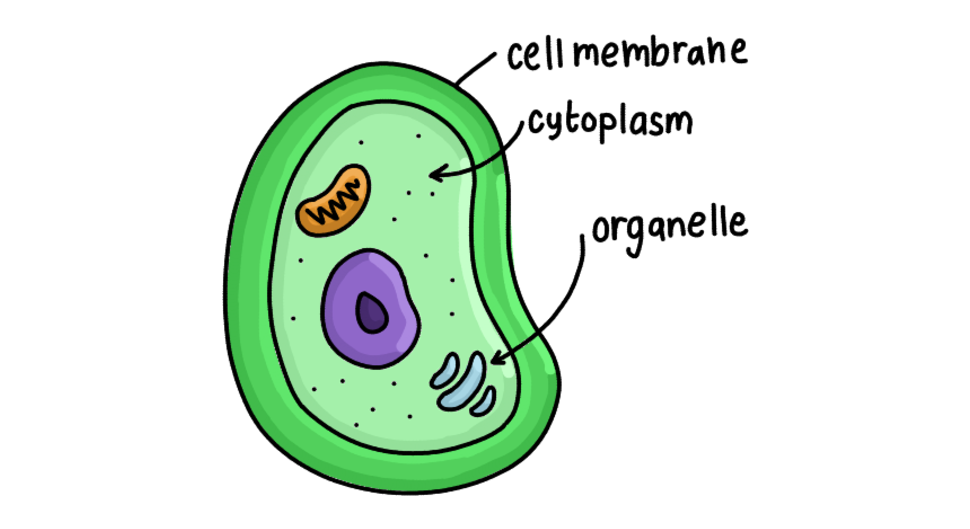
The cell membrane is also a semi-permeable barrier, meaning it regulates what’s allowed to come and leave the cell. In this post, we’ll explore what it’s made of, how it allows substances to move across it, and how cancer can manipulate it.
What’s the Cell Membrane Made of?
The cell membrane is primarily made up of phospholipids, but also includes cholesterol and proteins.
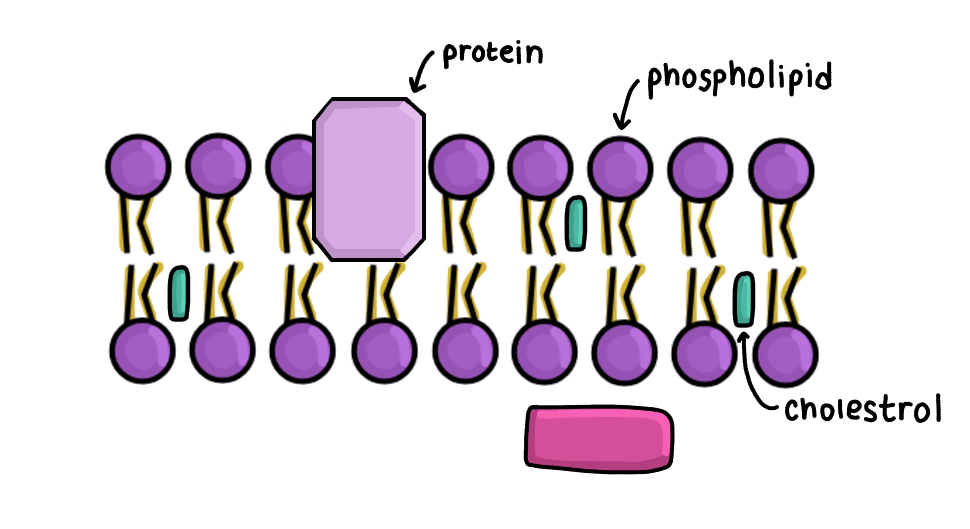
All of these combine together to form the fluid mosaic model. This model states that parts of the cell membrane move freely and fluidly, without being stuck in one place. Let’s explore what each part of the cell membrane is, and how it aids the cell.
Phospholipids: The Building Blocks of the Membrane
Phospholipids are made up of a head and 2 tails. The head is made of a phosphate and glycerol molecule, while the 2 tails are made of hydrocarbon chains ( basically a chain of carbon and hydrogen atoms). 2 layers of phospholipids, each one called a phospholipid bilayer, make up the cell membrane.
Phospholipids are amphipathic, meaning that they are both water-loving (hydrophilic) and water-hating (hydrophobic). The water-loving part is their head, while the water-hating part is their tail. In the cell membrane, this means the heads face outwards to the fluid, and the tails face inwards to be shielded away from the water.
Phospholipids can have 2 types of fatty acid tails:
- Saturated
- Unsaturated
Saturated tails have no double bonds between their carbons in the hydrocarbon chain. They have the maximum number of hydrogen atoms possible (saturated with hydrogen atoms), and are straight.
Unsaturated tails have 1 or more double bonds between their carbons. This means that the carbons in the double bond can only have 1 hydrogen atom attached to them, making them unsaturated. The double bond causes a bend in the tail. Most membranes contain a mix of both unsaturated and saturated tails.
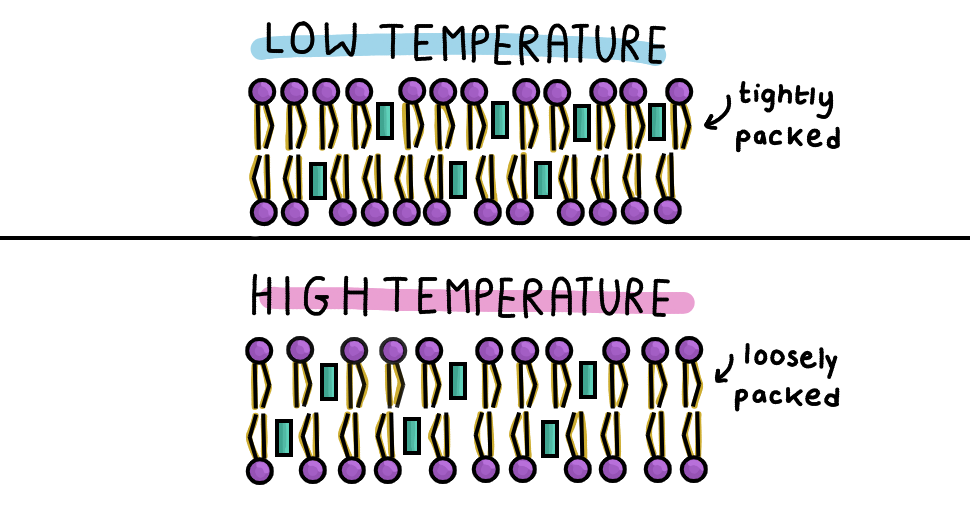
At different temperatures, saturated and unsaturated tails can act differently. In cooler temperatures, straight tails pack tightly together, making a rigid membrane.
Unsaturated tails, on the other hand, can’t pack as tightly together due to their bent tails, forcing the membrane to be more fluid. At higher temperatures, unsaturated tails can become too spaced out, causing the membrane to become leaky, while saturated tails are still able to maintain the appropriate fluidity. There are other molecules that prevent membranes from becoming too rigid or fluid.
Cholesterol: Maintaining Membrane Fluidity
Cholesterol helps make sure the membrane isn’t too rigid or leaky in low or high temperatures. Think of it as the glue holding phospholipids together. If the temperature is too low, cholesterol keeps phospholipids from packing together too tightly. If the temperature is too high, cholesterol reduces how far phospholipids can move, making them stick together.
Proteins: Communication, Transport & Regulation
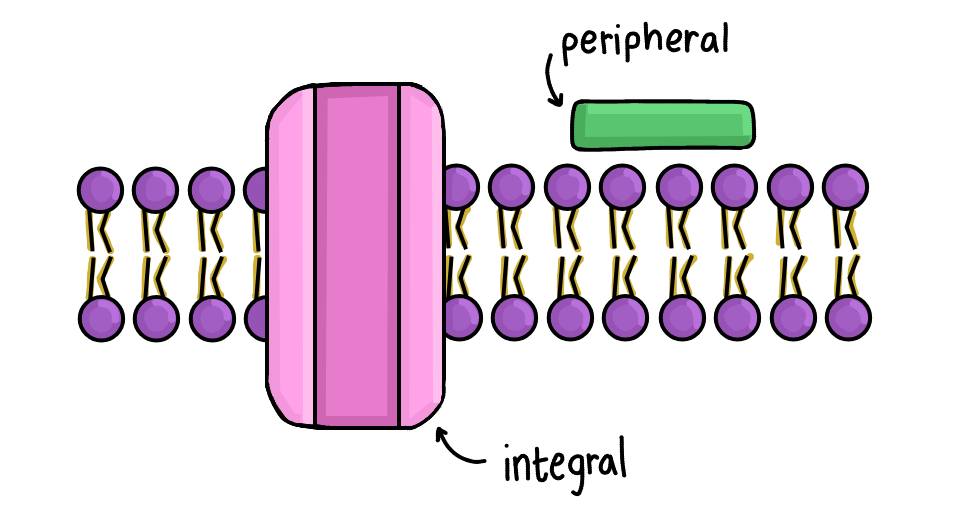
Proteins help with the transport of materials across the membrane, receiving signals from inside/ outside the cell, communication with other cells, and more. There are 2 kinds of proteins:
- Integral
- Peripheral
Integral proteins are embedded inside the membrane. They have a hydrophobic part that allows them to stay in the water-hating core of the cell membrane, and a hydrophilic part that extends out. Integral proteins that extend all the way through both sides of the membrane are called transmembrane proteins.
Peripheral proteins are proteins attached loosely to either the inside or outside of the cell membrane.
Proteins and lipids in the cell membrane can have carbs attached to them. These are called glycoproteins and glycolipids, and the combination of both in the cell membrane is called the glycocalyx, a sugar coating surrounding the cell membrane.
It helps the cell regulate the water that goes in and out of the cell, as well as allowing immune system cells to recognize whether a cell is from the host or not (here is a post explaining how the immune cells do this).
Types of Transport Across the Cell Membrane
As mentioned earlier, the cell membrane is semi-permeable. Molecules that are small and nonpolar (water-hating) have a much easier time going through than molecules that are large and polar (water-loving). Nonpolar molecules have an easier time getting across because they are able to cross the hydrophobic core of the membrane much more easily.
Substances move across the cell membrane according to their concentration gradient. A concentration gradient in the cell is the change in the concentration of the same substance across a membrane. Substances move from places that have high concentrations to places that have low concentrations to eventually even out both sides.
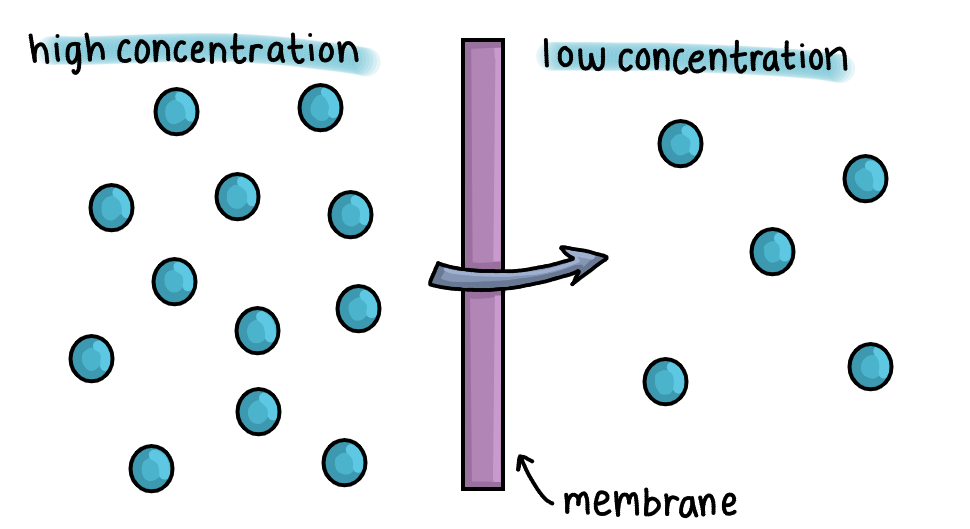
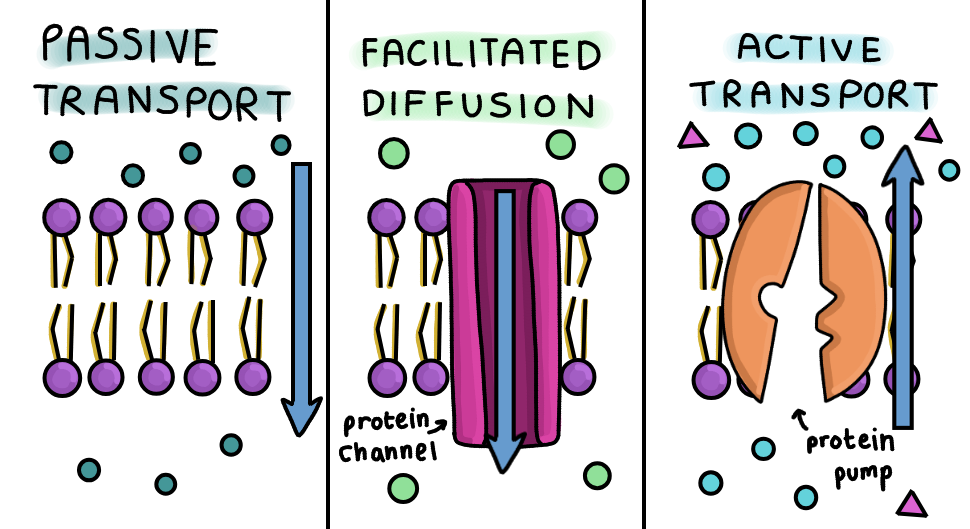
One type of transport, called passive transport, is where substances move down the concentration gradient. So, they move from high concentration places to low concentration places, across the membrane.
However, for large and polar molecules, as mentioned earlier, it can be hard to cross the membrane when going down their concentration gradient. The cell membrane instead has protein channels that allow these molecules to pass through the membrane in a process called facilitated diffusion.
Sometimes, the cell needs to make substances go against their concentration gradient. This can mean pushing substances into an already saturated place. To do so, the cell relies on protein pumps in the cell membrane that use ATP to push substances in the opposite direction. This is called active transport.
Both the channels and pumps can be controlled by ligands, chemical messengers that attach to a receptor and cause a chain reaction of events to happen in the cell.
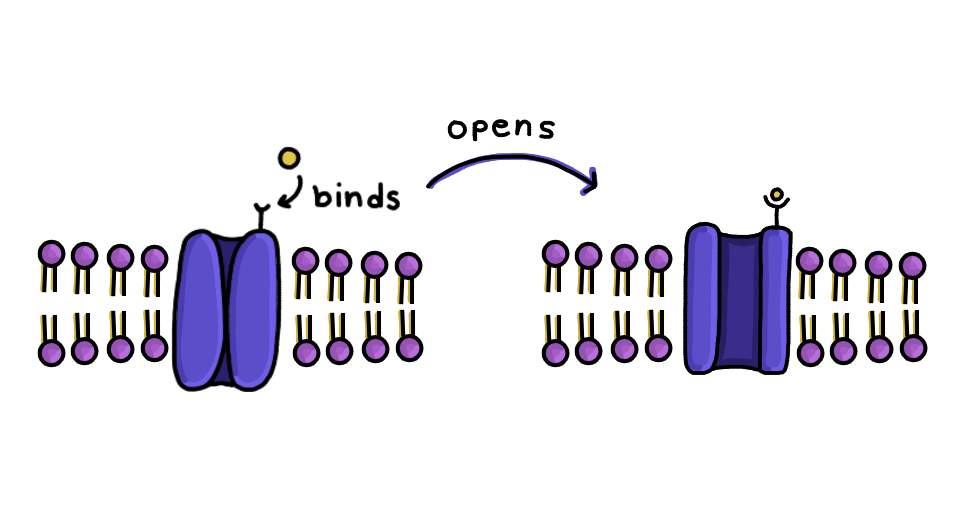
This can eventually cause an action like a protein pump or channel opening or closing in the cell.
Sometimes the cell needs to receive or send off larger things. In order to do so, it relies on 2 processes: exocytosis and endocytosis.
Exocytosis is when cells transport material out. They first package it in a layer of phospholipids called a vesicle. This vesicle is transported to the cell membrane, where it fuses with it and releases the contents.
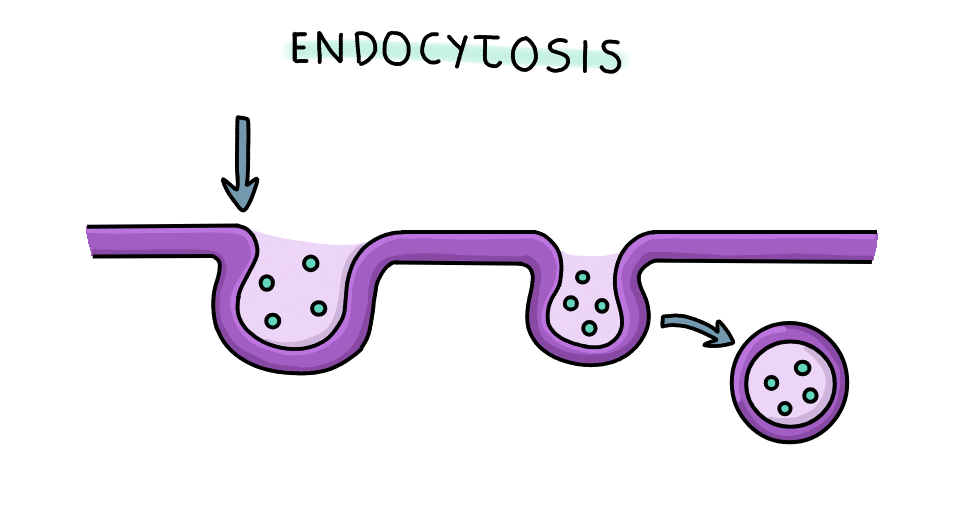
Endocytosis is where cells transport materials in. The cell membrane contorts to form an area to ingest the substance, and then pinches off into a vesicle inside the cell, where it transports the material to wherever it needs to go.
Why this Matters for Cancer
Cancer cells utilize something similar to pseudopodia (an arm-like extension a eukaryotic cell can make with the cell membrane) called invadopodia to spread to other parts of the body in a process called metastasis. This extension can secrete enzymes like matrix metalloproteinases (MMPs) via exocytosis to destroy the extracellular matrix (liquid and other substances surrounding cells) and structural proteins in tissues.
Eventually, cancer cells can squeeze through and reach the bloodstream, allowing them to reach the rest of the body.
Conclusion
The cell membrane and its components helps work together to keep the cell both alive and connected to its surroundings.
Cancer cells can exploit these features to push through surrounding tissue, break into the bloodstream, and ultimately spread to new parts of the body.
Even something as small as a cell border can help us understand how cancer works.
Sources:
https://www.khanacademy.org/science/ap-biology/cell-structure-and-function/plasma-membranes/a/structure-of-the-plasma-membrane
https://www.youtube.com/watch?v=iYG_GH1EdEc
https://www.youtube.com/watch?v=qBCVVszQQNs
https://www.khanacademy.org/science/ap-biology/cell-structure-and-function/membrane-permeability/v/cell-membrane-introduction
https://www.khanacademy.org/science/ap-biology/cell-structure-and-function/membrane-permeability/v/cell-membrane-overview-fluid-mosaic-model
https://www.youtube.com/watch?v=y31DlJ6uGgE
https://openstax.org/books/anatomy-and-physiology-2e/pages/3-1-the-cell-membrane