Written by Staff Writer George Moromoke Ugochukwu
All the cells in our bodies need oxygen and nutrients. This is achieved through blood vessels, or channels that transport blood across the body.
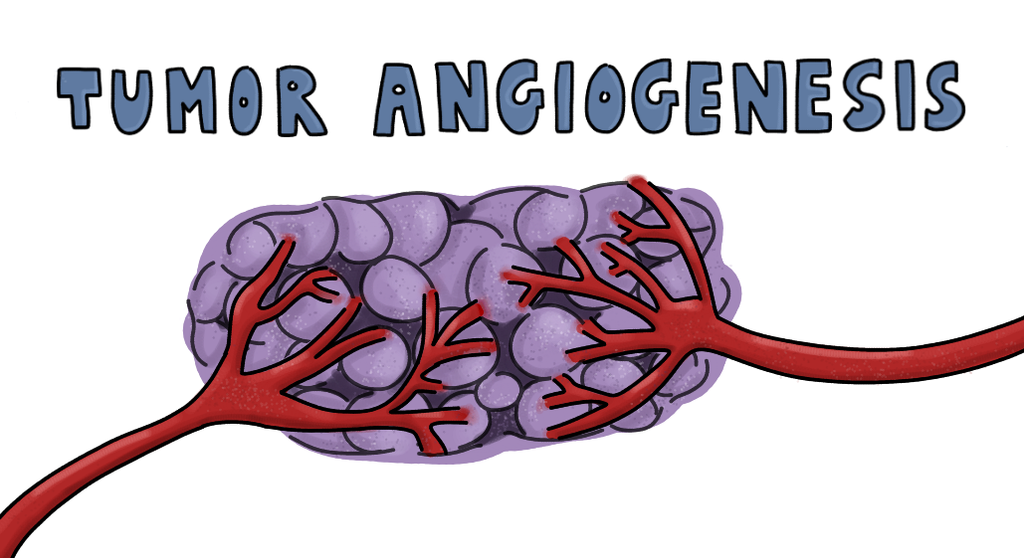
As canccerous cells multiple and grow to form tumors, they also need more oxygen and nutrients to survive. Tumors can hijack a process called angiogenesis to encourage the growth of new blood vessels towards them.
So, how do tumors make blood vessels grow towards them through angiogenesis? And why is blocking this process not enough to cure cancer?
What is Angiogenesis
Angiogenesis is the process by which new blood vessels form from pre-existing ones, and it’s important for supporting wound healing as well as supplying oxygen-rich blood to the organs and tissues.
The body controls angiogenesis by producing a precise balance of growth and inhibitory signals in healthy tissues. When this balance is disturbed, the result is either too much or too little angiogenesis. This can mean blood vessels can form excessively, or fail to develop.
Abnormal angiogenesis underlies many deadly conditions including: cancer, skin diseases, age-related blindness, stroke, and more.
The 2-Millimeter Problem
When a tumor grows, cells inside the core can run out of oxygen because they are too far away from existing blood vessels. The estimated limit for a tumor is usually around 1-2 millimeters.
This low oxygen state is called hypoxia. Stressed cancer cells can release proteins like vascular endothelial growth factor (VEGF). This protein acts like an alarm and binds to nearby blood vessels, making them sprout new branches that grow directly into the tumor.
Once these new vessels grow, they can help provide more oxygen and nutrients to the tumor. However, these blood vessels are often twisted and leaky, which can accidentally help cancer cells break free from the original tumor and enter the bloodstream to metastasize.
HIF-1α: How Cancerous Cells Detect Low Oxygen
Cancer cells rely on a protein called hypoxia-inducible factor 1-alpha (HIF-1α) to know when they don’t have oxygen, or have little left.
When oxygen is at its normal level, cells break down HIF-1α constantly. This keeps the protein’s levels low. However, when oxygen levels get low, the breakdown slows, allowing HIF-1α to accumulate. This activates genes in the cells that make them respond to this change in oxygen level.
Some of the genes activated encourage the cell to make VEGF, which signals the nearby blood vessels to make new blood vessels that reach the cells. Tumors exploit this process to allow them to gain nutrients and continue growing.
Low oxygen levels can also make certain cancer treatments less effective as a result. Radiation therapy needs oxygen to create DNA damage in cancerous cells. Areas with less oxygen can be less sensitive to radiation. Hypoxia can also contribute to treatment resistance and aggressive tumor behavior in certain cancers.
The Angiogenic Switch
This describes the point when the signals around a tumor begin to shift towards blood vessel growth. Signals like VEGF become more prevalent than signals that seek to restrain growth. This is a gradual, rather than sudden, event.
This “angiogenic switch” can be reached due to low oxygen levels, genetic changes in cancerous cells, and signals from other surrounding cells. Once angiogenesis becomes more active, the tumor can get more of both nutrients and oxygen, allowing it to survive and grow larger.
What Are the Types of Angiogenesis
Cells called endothelial cells line blood vessels. They can respond to chemical signals that tell them where to grow and at what time. These cells are essential to angiogenesis.
There are two main types of angiogenesis:
- Sprouting
- Intussusceptive
Let’s explore how each one works.
Sprouting angiogenesis:
- Cells in oxygen-deprived tissue release chemical signals ( like VEGF) that promote the growth of new blood vessels
- Enzymes break down surrounding parts of existing blood vessels, allowing for endothelial cells to move
- The endothelial cells either move towards the chemical signals or duplicate to make more cells
- The cells form into a precursor of the blood vessel (hollow tube)
- The new vessels connect with other pre-existing vessels, and supporting cells help make the walls stronger
During cancer, this process can be hijacked by tumor cells to help encourage blood vessel growth that allows them to gain both nutrients and resources from the body.
Intussusceptive angiogenesis
- An existing blood vessel develops columns of tissue inside
- The blood vessel splits into two new capillaries (smaller, more delicate versions of vessels)
This process can help reorganize existing vessels quicker and more efficiently without needing all the excessive moving and duplication of cells. It can be used by tumors to develop and remodel their blood vessels.
Can We Stop Tumor Angiogenesis
One way to prevent angiogenesis in cancer involves the use of medications called angiogenesis inhibitors to block tumors from forming the new blood vessels they need.
For example, drugs like Bevacizumab bind directly to VEGF proteins so they cannot activate blood vessel cells by binding to VEGF receptors. Other drugs like Sorafenib and Sunitinib stop VEGF receptors from sending growth signals inside the blood vessels.
These drugs can be given as an IV or as pills or capsules to swallow. Some are given alone, but most are used in combination with other cancer treatments like chemotherapy or immunotherapy. Depending on the type of cancer, they can be used as part of first-line treatment ( initial medical treatment) following diagnosis or second-line treatment if cancer progresses despite treatment. These treatments don’t work equally well for every cancer.
However, they can cause side effects that range from mild to severe. This is because they affect the same pathways that help maintain healthy blood vessels and support normal body functions. Some examples include high blood pressure, fatigue, bleeding, skin reactions, and delayed wound healing.
Why Isn’t Anti-Angiogenetic Therapy a Cure
So, if blood vessels allow tumors to survive and continue to grow, why don’t we just block their growth?
Here are some reasons why this isn’t the best idea:
- Tumors can use alternate growth signals when VEGF signalling is blocked. This allows them to continue to gain blood vessels despite treatment.
- Cancer cells can adapt to low levels of oxygen by changing metabolism and activating other mechanisms.
- Blood can be obtained in other ways, like using existing blood vessels or growing next to pre-existing ones. In some cancers, tumors can also form vessels of their own, in a process called vasculogenic mimicry.
- Not all parts of the tumor will respond equally. Some can get the right dose to be affected, while other parts could be less responsive.
Vascular Normalization: A Potential Alternative to Anti-Angiogenic Therapy
Tumor blood vessels are often poorly constructed. They are leaky and poorly supported by the surrounding cells. This can make it hard for treatments to reach cancer cells.
One idea researchers have to combat this is vascular normalization. Instead of trying to eliminate blood vessels to the tumor, this approach tried to make them more organized and useful. Sometimes, anti-angiogenic treatments can improve vascular normalization, in a period called a normalization window.
These better structured blood vessels can improve oxygenation in the tumor and allow treatments to reach cancerous cells more efficetively. While increased oxygenation might seem counter-intuitive, it may be able to increase the effectiveness of radiation therapy. It could also influence how immune cells enter the tumor.
This is still a hypothesis though, and researchers are still trying to figure out how to achieve it in different cancers and treatment types.
Conclusion
Angiogenesis is a normal biological function that allows our bodies to help deliver oxygen and nutrients to different cells. However, cancerous cells can hijack it to allow them to continue to survive and grow. By exploiting proteins like VEGF and HIF-1α, tumors can encourage the growth of new blood vessels towards them. Even though we are currently trying to tackle this problem with anti-angiogenic treatments, cancers can adapt through other ways, leading to resistance. Researchers are instead exploring options like vascular normalization and combination therapies instead.
If you learned anything, make sure to send us a message on our Instagram (@whencellsresist). We love hearing back from our readers!
All original insights and illustrations are our own. This content is not intended as medical advice.
Sources
https://my.clevelandclinic.org/health/articles/24206-angiogenesis
https://en.wikipedia.org/wiki/Angiogenesis
https://www.sciencedirect.com/topics/medicine-and-dentistry/sprouting-angiogenesis
https://www.cancer.org/cancer/treatment-types/angiogenesis-inhibitors.html
https://www.nature.com/articles/s41392-023-01460-1/figures/1
https://www.jcancer.org/v11p4474.htm
https://www.cancer.gov/about-cancer/treatment/types/immunotherapy/angiogenesis-inhibitors-fact-sheet
https://pmc.ncbi.nlm.nih.gov/articles/PMC6571025
https://pmc.ncbi.nlm.nih.gov/articles/PMC4063884
https://pubmed.ncbi.nlm.nih.gov/17717633
https://www.youtube.com/watch?v=f4SgXw2Gx00
https://www.youtube.com/watch?v=qC_XTGC88Y8
https://stanfordhealthcare.org/medical-treatments/a/angiogenesis-inhibitors.html
https://www.ncbi.nlm.nih.gov/books/NBK53238
https://my.clevelandclinic.org/health/articles/24206-angiogenesis