As we saw in the previous post, proteins are essential to life because of all the different functions that they perform. But how does the cell make them?
In this post, we’ll explore how proteins are assembled inside the cell through a process called protein synthesis, and how disruptions in this process can play a surprising role in cancer.
Decoding DNA: The Path from Genetic Code to Proteins
A key principal plays a big role in protein synthesis: the central dogma. This principle describes the way that genetic information travels throughout the cell. It states that DNA makes RNA which makes proteins
There are 2 stages to making a polypeptide chain ( a chain of amino acids before any protein folding ):
- Transcription ( DNA to RNA )
- Translation ( RNA to protein )
Let’s take a look into each one of these processes in more detail.
Transcription: Turning DNA into Messenger RNA
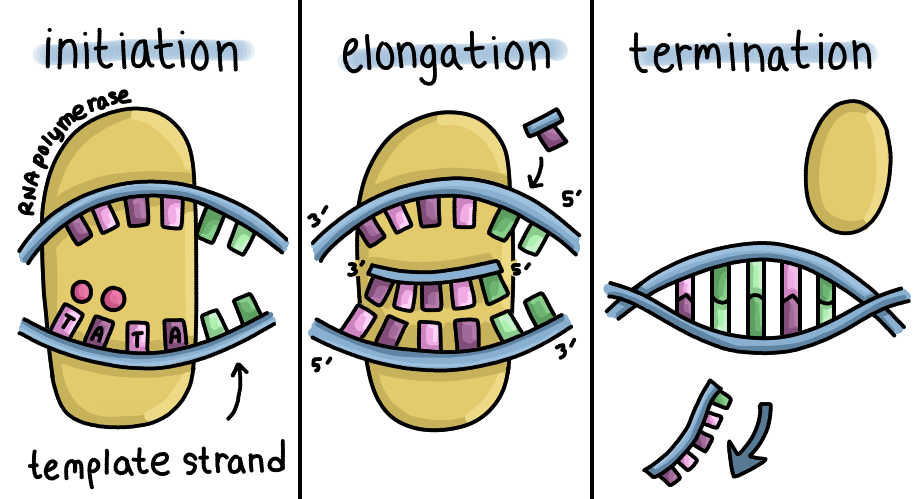
Transcription is the process of making a messenger RNA ( mRNA ) from a gene in the DNA. This process is conducted by an enzyme called RNA polymerase ( specifically RNA polymerase 2 in eukaryotes) . To learn more about enzymes, here is a previous blog post.
There are 3 stages in transcription:
- Initiation
- Elongation
- Termination
- Initiation
Transcription begins when transcription factors bind to a region of DNA called the promoter. This region determines how often a gene is expressed. In eukaryotic cells, RNA polymerase binds to a promoter region called the TATA box, called so because of the DNA sequence of TATAAA. RNA polymerase then binds and unwinds the DNA, exposing a single strand to use as a template.
- Elongation
The RNA polymerase begins to read the DNA and construct the mRNA sequence in a 5’
to 3’ direction. The strand that it reads is called the template strand and it matches RNA nucleotides to DNA nucleotides via complementary base pairing, and adds new nucleotides to the existing mRNA chain via phosphodiester bonds. To learn more about what specifically DNA and RNA are, here is a previous blog post.
- Termination
Terminator proteins signal to the RNA polymerase that the mRNA is complete. The enzyme lets go of the newly made RNA and leaves the DNA.
mRNA Processing: Refining the Genetic Message
In prokaryotes, the mRNA goes directly to the ribosome for translation. For eukaryotes, however; there needs to be some more processing before the mRNA leaves the nucleus.
The mRNA that is freshly made from the RNA polymerase before any modifications is called premRNA. Some of the main modifications to turn it into mature mRNA include:
- A 5’ cap ( protects mRNA from being broken down prematurely and helps ribosomes bind initiatlly )
- A 3’ poly A tail ( increases stability and aid transportation from nucleus to cytoplasm )
- Splicing ( removes the noncoding regions(introns) and stiches coding regions (exons) together) via enzymes called splicesomes
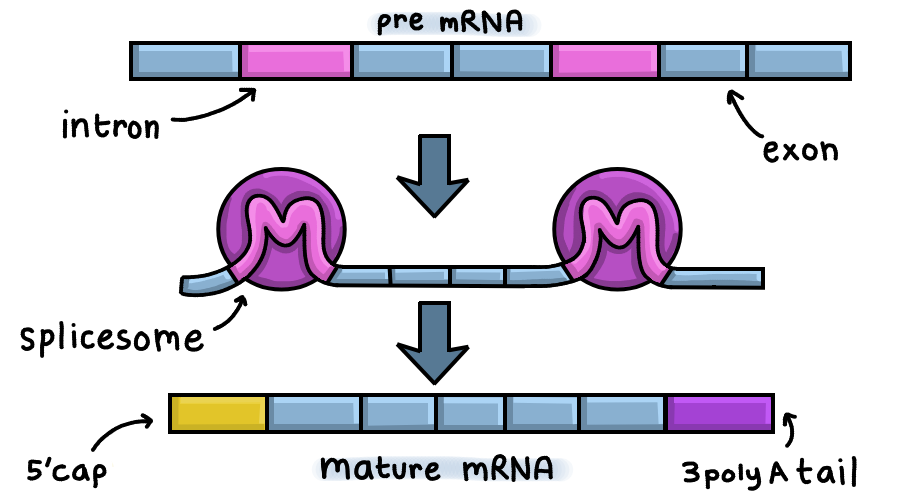
After processing the mature mRNA leaves the nucleus through the nuclear pores and travels to the cytoplasm of the cell for ribosomes that are either free floating in the cytoplasm or on the ER. Free floating ribosomes are used to make proteins used inside the cell, while ribosomes attached to the ER usually make proteins that will be transported to outside of the cell.
Translation: Building Proteins at the Ribosome
This is the second part of protein synthesis, where the ribosome reads the mRNA, base for base, and uses the information to make a polypeptide.
The ribosome reads the mRNA in sets of 3 nucleotides called codons. To learn more about codons, here is a previous blog post.
In the mRNA, the start codon that tells the ribosome where to start is the codon AUG, which codes for the amino acid methionine. There are also 3 different types of stop codons:
- UAA
- UAG
- UGA
These stop codons tell the ribosome when the polypeptide chain is complete. For a refresher on what proteins are and the different levels of their structures, here is a previous blog post.
There are 3 main components that make the polypeptide chain in translation:
- ribosomes
- tRNA
- mRNA
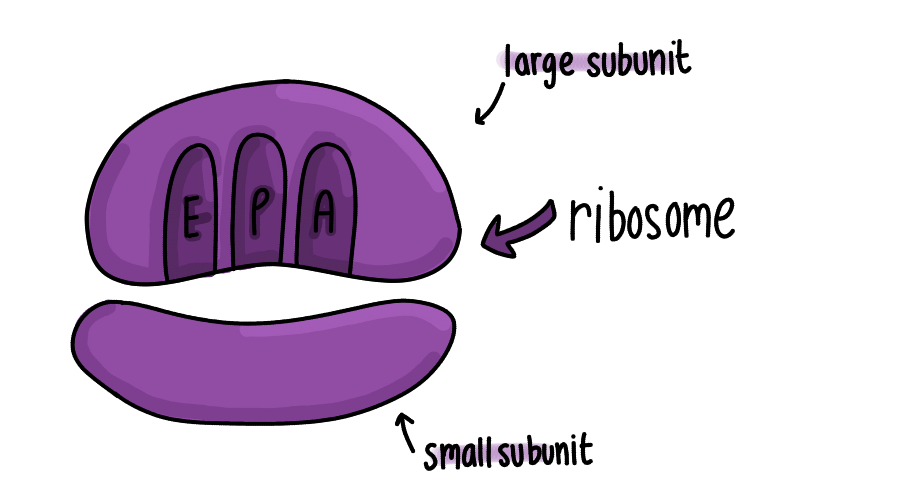
The ribosomes are where the polypeptides are made. They are made up of protein and rRNA, another type of RNA and are produced in the nucleolus of the nucleus in the cell. Ribosomes contain 1 large and 1 small subunit. They have 3 binding sites:
- A site ( aminoacyl )
- P site ( Peptidyl )
- E site ( Exit )
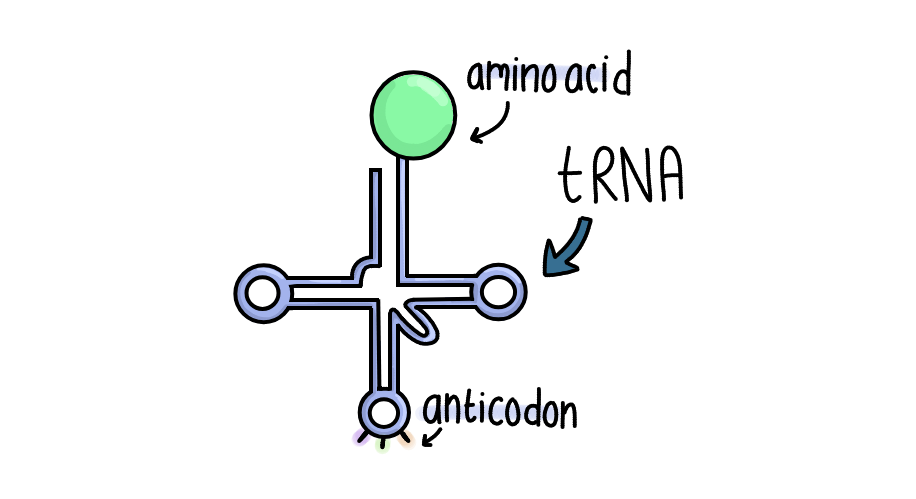
tRNA is another type of RNA that brings amino acids to the ribosome to be attached to the polypeptide chain. They have 1 end that carries the amino acid and another that is complementary to a specific codon in the mRNA. This complemenary codon on the tRNA is called the anti codon.
There are 3 stages in translation:
- Initiation
- Elongation
- Termination
- Initation
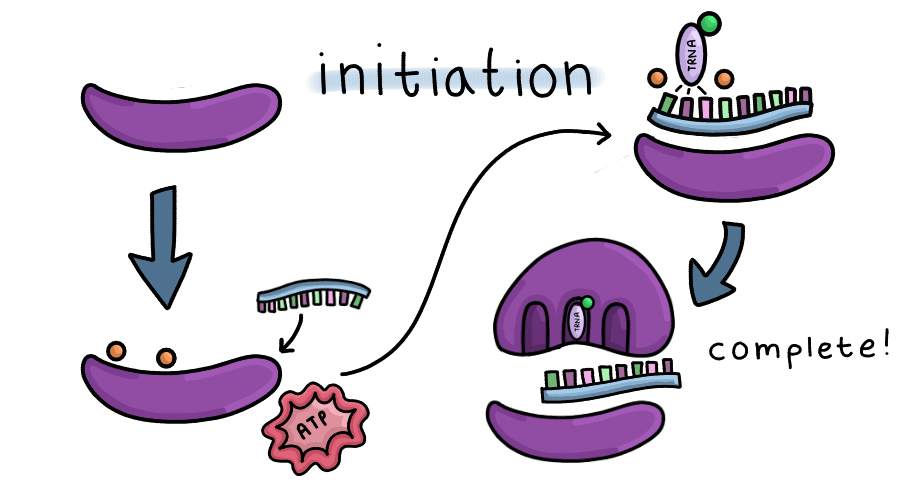
Initiation factors help the 2 ribosomal subunits, mRNA and tRNA find their way to each other with the help of ATP for energy. The small ribosomal subunit moves arond the mRNA and locates the start codon. The tRNA containing the amino acid methionine and the anticodon to the start codon binds to the small ribosomal subunit where the start codon is. The large ribosomal subunit then attaches onto this structure, placing the tRNA at the P site and making the initiation complex.
- Elongation
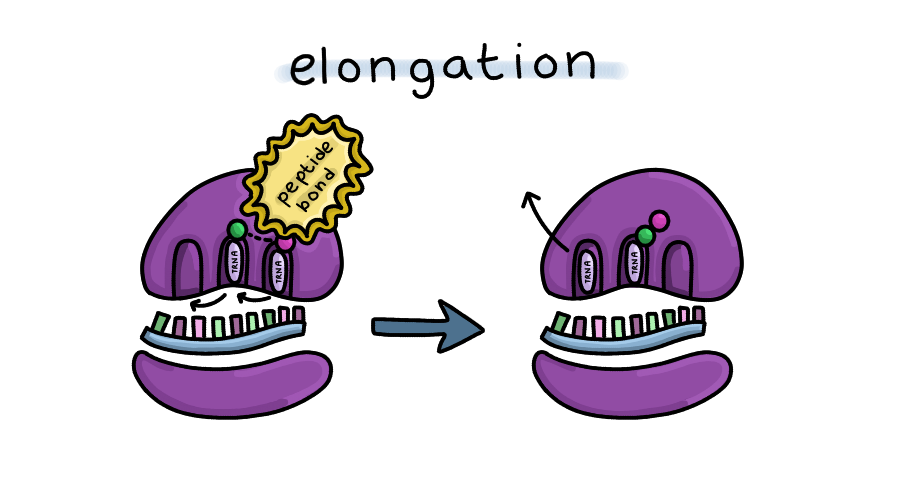
Another tRNA moves into the A site, and hydrogen bonds form between its anticodon and the matching codon found on the mRNA. An enzyme in the ribosome catalyzes the bond between the 2 amino acids on the 2 tRNAs next to each other, and forms a peptide bond between them. The amino acid chain gets longer and is passed onto the tRNA in the A site. The tRNA in the p site moves to the E site and exits, while the tRNA in the A site moves to the P site.
- Termination
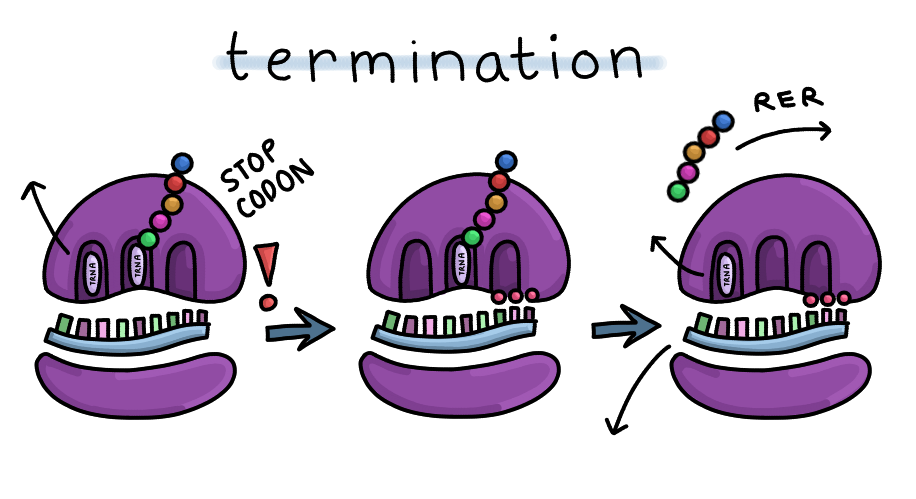
The ribosome encounters the stop codon, and instead of a tRNA binding, proteins called release factors bind to the A site. This makes the enzyme that normally forms peptide bonds between adjacent amino acids to instead add a water molecule to the last amino acid of the chain. The finished polypeptide chain is released, and is processed to fold it into the right shape and transported to where it needs to go.
You may be wondering how the tRNA attaches onto specific amino acids before it transports them to the ribosome. The enzyme aminoactly-tRNA synthase does this job. There is a specific version of this enzyme for each amino acid, and once it recognizes both the specific amino acid and tRNA together, it attaches them via a process fueled by ATP.
When Protein Synthesis Goes Wrong: Ribosomes and Cancer
Ribosomes actually have a surprising role in cancer. Most of the time, ribosome production is tightly controled and has multiple checkpoints in place to maintain accuracy. Cancer cells modify the rRNA that makes up the ribosome, and makes it oncogenic. These ribosomes, called onco-ribosomes, prefer to translate oncogenic mRNAs to oncogenic proteins. This can lead to more misaligned proteins, fueling cancer cell growth. Cancer cells also increase ribosome production, called biogenesis. More ribosomes mean more protein synthesis and thus more growth for the cell.
Conclusion
Protein synthesis is one of the most critical systems in molecular biology and cancer biology. It turns the genetic information from the DNA into proteins that the cell can use to perform numerous jobs. When the process is distrupted, like in cancer, it can cause severe consequences to occur, and cancer cell growth to accelerate.
In the next post we’ll look at the modifications to the protein after it’s translated, and how cancer can hijack and exploit this process.
If you learned anything, make sure to send us a message on our Instagram (@whencellsresist). We love hearing back from our readers!
All original insights and illustrations are my own. This content is not intended as medical advice.
Drawings are simplified for illustrative purposes and may not be exact representations of the subjects
Sources
https://www.youtube.com/watch?v=8wAwLwJAGHs
https://www.youtube.com/watch?v=h3b9ArupXZg
https://www.ncbi.nlm.nih.gov/books/NBK9935/
https://jackwestin.com/resources/mcat-content/translation/initiation-termination-co-factors